
* All product/brand names, logos, and trademarks are property of their respective owners.
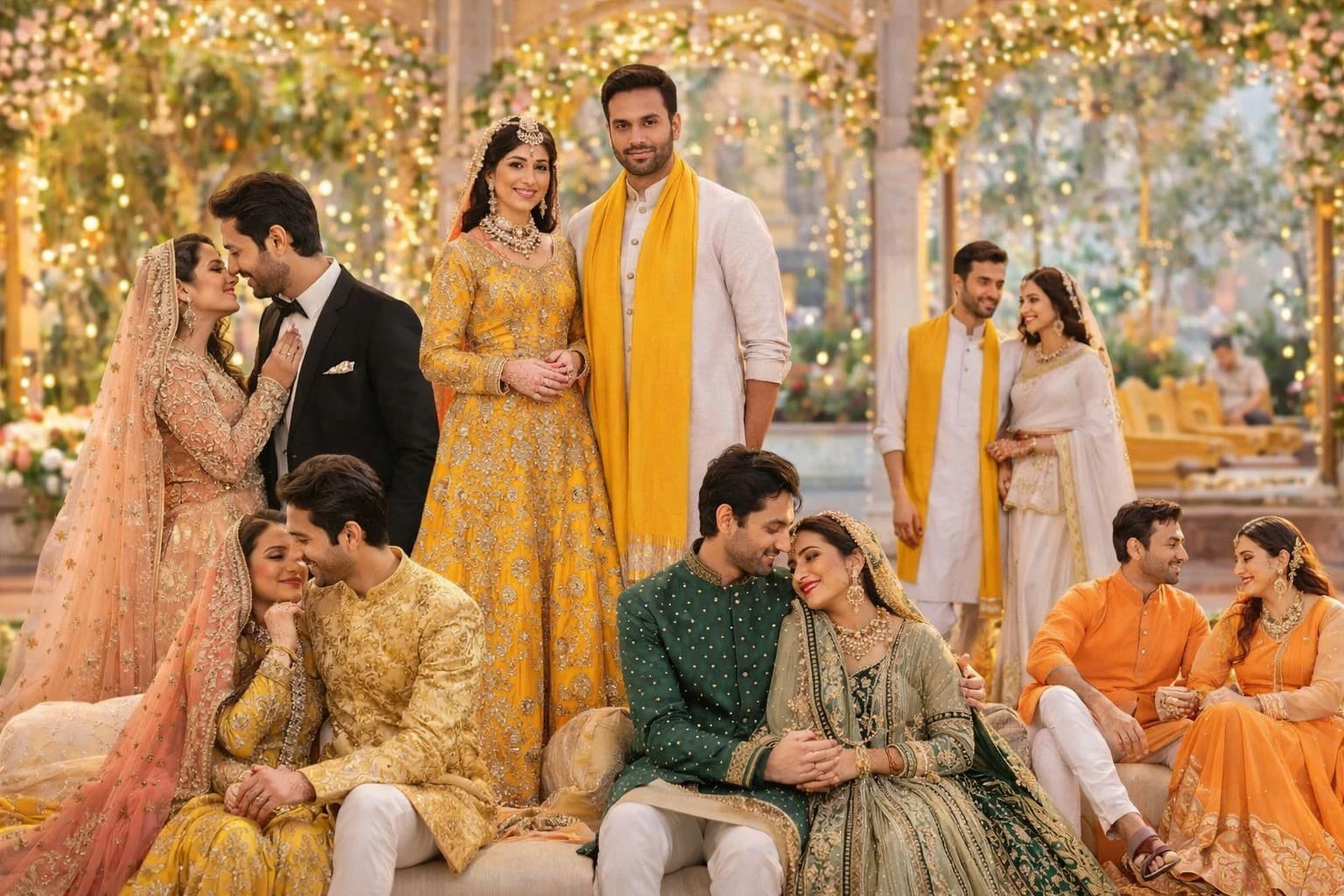
Pakistani weddings aren’t just a single-day event—they’re a full celebration that unfolds over several days, sometimes even a week. Each function has its own vibe, traditions, and meaning, making the entire experience feel like a journey rather than just a ceremony.
If you’ve ever wondered how it all fits together, this Pakistani wedding timeline breaks it down clearly—from the quiet beginnings of Mayun to the grand finale of Walima. Whether you’re planning a wedding, attending one, or simply curious about the culture, understanding the sequence makes everything much easier to follow.
Let’s walk through each event step by step so you know exactly what happens—and why it matters.
Before getting into each function, here’s the basic order most people follow in a traditional Pakistani wedding:
| Event | When It Happens | Main Purpose |
|---|---|---|
| Mayun | A few days before the wedding | Marks the start of pre-wedding rituals for the bride |
| Mehndi | 1–2 days before the wedding | A festive celebration with music, dance, and henna |
| Barat | Main wedding day | The groom’s side arrives for the marriage ceremony |
| Walima | Usually, the next day | A reception hosted by the groom’s family |
In a traditional setup, these events happen one after another, with each one building on the last. Mayun is usually quieter and more intimate, Mehndi brings the fun and color, Barat is the main wedding event, and Walima closes the celebration on a more formal note.
That said, not every family follows the same schedule. Some weddings keep all four events separate, while others combine functions to save time, money, or effort.
Mayun is usually the first major event in a traditional Pakistani wedding timeline. It marks the beginning of the wedding celebrations and is often centered around the bride. Compared with later functions, Mayun is quieter, more intimate, and rooted in older family customs.
Traditionally, this event takes place a few days before the wedding, although in some families it may begin earlier. The focus is less on glamour and more on preparing the bride for the upcoming celebrations.
Mayun has a soft, emotional feel. It signals that the wedding is now truly beginning, and for many families, that moment carries real cultural weight.

Today, Mayun is often much shorter than it used to be. In the past, it could continue for several days, but many modern weddings keep it brief or symbolic.
Common modern changes include:
Even with these changes, Mayun remains an important part of the traditional Pakistani wedding timeline because it sets the tone for everything that follows.
If there’s one event that truly captures the energy of a Pakistani wedding, it’s Mehndi. This is where the celebrations come alive—music, dancing, bright outfits, and a lively atmosphere that brings both families together.
Usually held one or two days before the Barat, Mehndi is less formal and more about fun, making it one of the most anticipated parts of the entire wedding timeline.

The overall vibe is energetic and festive. Unlike other events, Mehndi encourages participation—guests aren’t just watching, they’re part of the celebration.

Traditionally, Mehndi events were held separately by the bride’s and groom’s families. Each side would host their own gathering with their own guests and performances.
However, modern weddings have shifted toward:
This shift has made Mehndi even bigger and more vibrant, often turning it into one of the highlight events of the entire Pakistani wedding timeline.
Barat is the central event in the entire Pakistani wedding timeline. This is the day when the actual marriage takes place, and it’s usually the most formal and emotionally significant function.
It’s hosted by the bride’s family, while the groom arrives with his procession—known as the baraat. Compared to Mehndi, the atmosphere here is more structured and ceremonial.
Rukhsati is often the most emotional part of the entire wedding. It marks a major life transition, which is why this moment carries so much meaning for families.

While traditions remain strong, some families now choose to hold the Nikah separately in a mosque or at home, either before or after the Barat.
Barat stands at the heart of the Pakistani wedding timeline—it’s the moment where everything becomes official.

Walima is the last major event in the Pakistani wedding timeline, usually held the day after the Barat. Hosted by the groom’s family, it serves as a formal reception to introduce the couple to extended family, friends, and the wider community.
Compared to Mehndi and Barat, Walima has a more polished and relaxed atmosphere. It’s less about rituals and more about gathering, celebrating, and sharing the news of the marriage.
The event feels more like a reception than a ceremony, with the focus on hospitality and presentation.
Walima brings the entire wedding journey to a close on a graceful note. After days of celebrations, it offers a chance for everyone to come together one last time and celebrate the newly married couple.

Not every Pakistani wedding follows the traditional multi-day format anymore. With changing lifestyles, budgets, and preferences, many families now choose shorter or combined versions of the wedding timeline.
Here’s how different formats compare:
| Type | Description | Who It’s For |
|---|---|---|
| Traditional Multi-Day | Separate events for Mayun, Mehndi, Barat, and Walima over 3–5 days | Families who want the full cultural experience |
| 2-Day Wedding | Mehndi on one day, Barat + Walima on separate or combined days | A balanced mix of tradition and convenience |
| 1-Day Wedding | All events combined into a single function | Couples looking for simplicity and lower costs |
In a traditional setup, each event gets its own time and attention. This allows families to fully enjoy every ritual, but it also requires more planning, budget, and energy.
A 2-day wedding is now one of the most popular choices. For example:
A 1-day wedding keeps things simple. The Nikah, Barat, and Walima may all happen in one event, especially in urban areas or overseas Pakistani communities.
There’s no single “right” way anymore—the Pakistani wedding timeline has become flexible. Families now adapt it based on what works best for them while still keeping the essence of the traditions alive.
Whether you’re attending your first desi wedding or planning one yourself, a few practical tips can make the whole experience much smoother.
Understanding these small details helps you enjoy the experience instead of feeling overwhelmed. The Pakistani wedding timeline may seem complex at first, but once you know the flow, everything starts to make sense.


Feroza Arshad is a writer and content creator covering a range of subjects including news and current affairs, automobiles, sports, technology and coding, digital marketing, and Google and search trends. Her work appears across several blogs and publications. She focuses on clear, well-researched, and genuinely useful writing — breaking down developments, reviewing products, and explaining technical topics in plain language anyone can follow.
Be the first to share your thoughts
No comments yet. Be the first to comment!
Share your thoughts and join the discussion below.